
Findings overview
Patterns observed across the cohort, anonymized.

Status
Findings are added to this page as each facility model in the cohort is completed. Representative, anonymized per-facility results are published as individual case studies; the full figure sets, complete wind-case matrices, and quantitative summaries are shared on request with the owner, developer, or design team of record for each facility.
What we look at
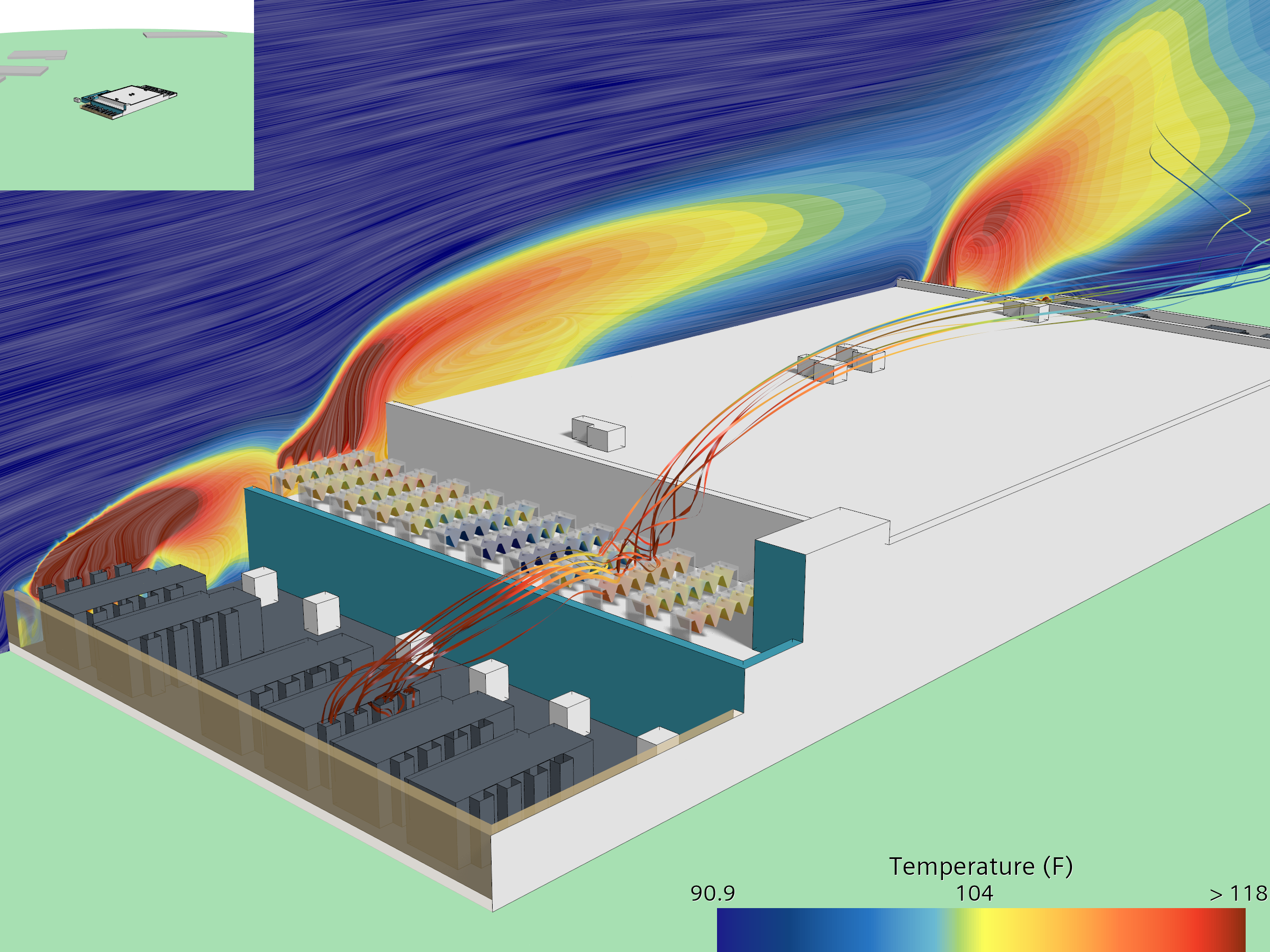
Each facility is evaluated for four exterior thermal phenomena under the same set of wind and operating cases:
- Interaction between generator radiator plumes and adjacent generator-unit intakes inside the yard.
- Entrainment of generator stack and radiator plumes into rooftop heat-rejection equipment intakes.
- Re-ingestion of rooftop discharge into adjacent rooftop equipment under low-wind, buoyancy-dominated conditions.
- Outside-air-handler intake exposure to either plume family.
Emerging patterns
As the cohort progresses, patterns are summarized here in anonymized form — for example, how generator-yard orientation relative to the prevailing summer wind correlates with rooftop intake exposure, or how rooftop equipment density correlates with self-re-ingestion under calm conditions. The intent is to surface descriptive observations across the population, not to evaluate any individual design.
Disclosure. This is independent research conducted by Resolved Analytics without engagement, sponsorship, or input from any firm or building owner. All inputs are derived from cited public sources; no proprietary drawings, specifications, or operational data are used. Facilities are described by type and configuration only and are not identified. Results represent idealized exterior conditions and do not represent the actual as-built performance of any facility. No claims are made regarding life-safety, code compliance, or operational performance. This material is not engineering services rendered to any party.