
How to Hire a CFD Consultant: A Technical Buyer's Guide



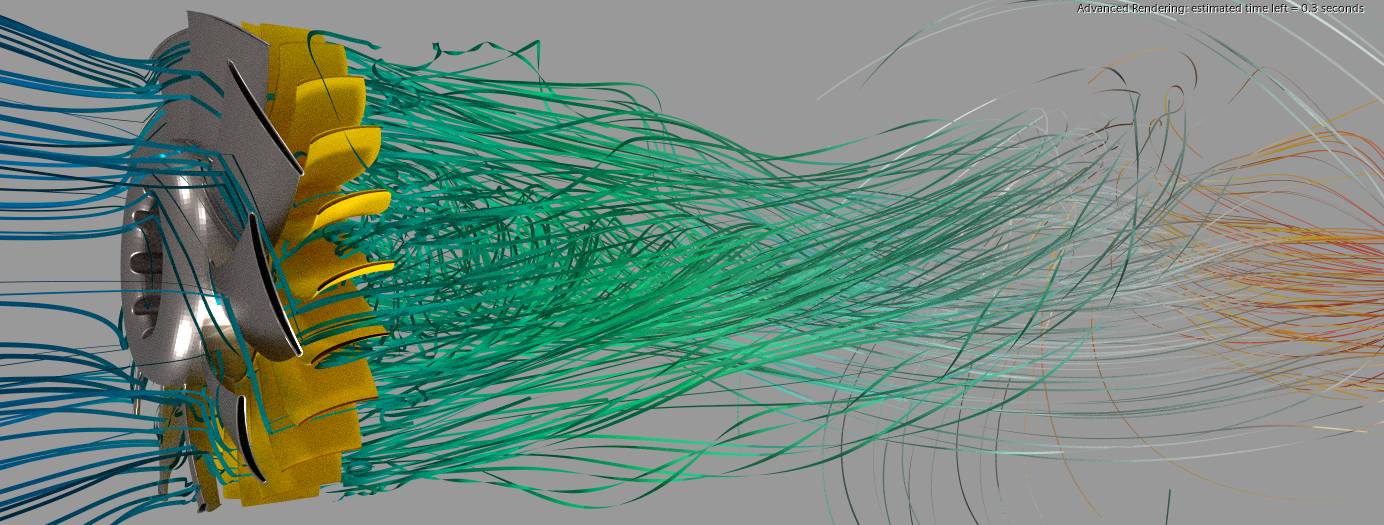
Computational Fluid Dynamics (CFD) consulting is a specialized engineering service in which an external analyst or team uses numerical simulation to solve fluid flow, heat transfer, or multiphysics problems on behalf of a client organization. Hiring the right CFD consultant requires evaluating technical qualifications, validation methodology, deliverable quality, and alignment between the consultant's expertise and the specific physics of your application.
When Does Your Project Need a CFD Consultant?
Not every fluid dynamics question requires external consulting. A CFD consultant adds the most value when one or more of the following conditions apply:
The physics are complex or unfamiliar. Your internal team encounters multiphase flow, conjugate heat transfer, fluid-structure interaction, reacting flow, or other phenomena outside their core simulation experience.
The business stakes are high. The simulation will directly influence a design selection, certification decision, product launch timeline, or capital expenditure — and inaccurate results carry significant financial or safety consequences.
You lack the software or hardware. Commercial CFD platforms (such as Siemens STAR-CCM+, ANSYS Fluent, or OpenFOAM) require substantial licensing investment and high-performance computing infrastructure that may not be justified for occasional use.
Your team is at capacity. Engineering staff are fully allocated to core product development, and the simulation workload is temporary or project-specific rather than continuous.
You need independent validation. A third-party analysis provides an objective check on internal simulation work, which is especially valuable for regulatory submissions or dispute resolution.
What Qualifications Should a CFD Consultant Have?
The minimum technical qualifications for a CFD consultant working on engineering-grade problems include:
Advanced degree in mechanical engineering, aerospace engineering, chemical engineering, or a closely related discipline with a focus on fluid mechanics or heat transfer
Proficiency in commercial or open-source CFD platforms relevant to your application — not just general familiarity, but demonstrated project experience with the specific solver and physics modules required
Understanding of the underlying physics beyond the software interface — including turbulence modeling selection, boundary condition specification, mesh generation strategy, and numerical convergence criteria
Industry-specific experience in your application domain (aerospace, energy, automotive, data centers, biomedical, etc.) — an analyst who has solved similar problems before will identify pitfalls faster and deliver results with higher confidence
Documented validation history — the ability to show past projects where simulation predictions were compared against experimental measurements or analytical correlations
What Questions Should You Ask Before Hiring?
Before engaging a CFD consultant, use these questions to evaluate whether the firm has the methodological discipline your project requires. These questions are derived from Resolved Analytics' Innovator's Inquiry framework — a pre-project planning process used to align simulation scope with business objectives.
Business Alignment Questions:
What specific business decision will this simulation influence? (Are you choosing between designs, passing a certification, avoiding a recall, or optimizing for cost?)
What is the estimated financial or schedule impact of the problem being solved? (Is this a million-dollar problem or a hundred-dollar problem?)
Who is the ultimate audience for the results? (The engineering team? An executive? A regulatory body?)
What does a "win" look like for you — and has the consultant confirmed they understand that definition of success?
Technical Scope Questions:
What are the precise, measurable operating conditions to be modeled? (Flow rates, power loads, ambient conditions, material properties)
What is the specific, pass/fail success criterion? (Example: "The case temperature must be below 42 degrees C" or "The pressure drop must not exceed 15 kPa")
What is the acceptable level of accuracy for this decision? (Broad trends, or accuracy within 2%?)
Are there any constraints or secondary objectives the simulation must not violate? (Cost limits, manufacturing constraints, pressure drop budgets)
Methodology Questions:
Will the consultant perform a mesh sensitivity study to confirm results are independent of grid density?
Will fundamental conservation checks (mass, energy, momentum) be documented?
How will the results be validated — against experimental data, analytical correlations, or other simulation methods?
Will the consultant deliver a formal confidence statement specifying the conditions under which the results are considered reliable?
If a consultant cannot clearly answer these questions during a scoping conversation, that is a significant risk indicator.
What Should CFD Deliverables Look Like?
The quality of a CFD consultant's deliverable reveals their professional discipline. A rigorous deliverable follows a structure similar to Resolved Analytics' 2-Page Results Summary framework:
The Business Problem ("The Why"):
The deliverable should open by restating the business question the simulation was designed to answer — in the client's language, not technical jargon. If the deliverable leads with mesh images or velocity contour plots instead of the business context, the consultant may be prioritizing technical show over business value.
The Key Insight ("The So What?"):
A strong deliverable isolates the single most important finding in one clear sentence — supported by one well-labeled chart or comparison visual. If the consultant delivers a 50-page report with dozens of plots but no clear takeaway, the analysis may lack focus.
The Recommended Action ("The Now What?"):
Every deliverable from a qualified consultant should include a specific recommendation, the expected business impact of following that recommendation, and concrete next steps with ownership and deadlines.
Red flags in deliverables:
Results presented without documented accuracy bounds or limitations
No comparison to experimental data, analytical solutions, or engineering intuition
Recommendations that are vague ("further study is needed") rather than specific and actionable
No formal confidence statement defining the applicability range of the results
How Much Does CFD Consulting Cost?
CFD consulting costs vary based on project complexity, duration, and the engagement model chosen. Typical cost components include:
Consultant hourly rates: $100 to $250 per hour for experienced CFD analysts, depending on specialization and firm size
Software licensing: Commercial CFD software typically costs $10 to $35 per hour per active simulation when licensed on a subscription or token basis
Hardware computing: Cloud-based high-performance computing costs approximately $0.05 to $0.20 per CPU-hour
Project duration: Most standard CFD consulting engagements take two to four weeks from scoping to final deliverable
A typical single-physics, single-geometry project may range from $5,000 to $30,000 in total cost. Complex multiphysics studies, large parametric sweeps, or extended engagements cost more.
For a complete cost breakdown, see the Guide to Estimating CFD Costs.
In-House vs. Outsourced vs. Co-Sourced: Which Model Fits?
There are three primary engagement models for CFD capability:
In-House (Build Your Own Team)
Best for: Organizations with continuous, year-round simulation workload across multiple projects
Cost structure: Salary ($95,000+ base for a qualified analyst, with a typical 2.0x overhead multiplier for benefits, management, and facilities), plus software licensing ($30,000+ annually for commercial platforms), plus hardware infrastructure
Trade-off: Highest capability and control, but highest fixed cost — difficult to justify unless the simulation pipeline is consistently full
Outsourced (Project-Based Consulting)
Best for: Intermittent or specialized simulation needs where the physics or application changes between projects
Cost structure: Hourly or fixed-fee per project, with no software or hardware investment required
Trade-off: Lowest fixed cost, but less integration with internal engineering teams and potential delays for project scheduling
Co-Sourced (Embedded Specialist)
Best for: Organizations with growing simulation needs that want to build internal capability over time while maintaining access to external expertise
Cost structure: Blended model — external specialists work alongside internal engineers, often using the client's existing software licenses
Trade-off: Balanced cost and capability, with the added benefit of knowledge transfer to internal staff
For a detailed financial comparison of these models, see the Co-Sourcing Engineering Services analysis.
Red Flags When Evaluating a CFD Consultant
Watch for these warning signs during the evaluation and proposal process:
No scoping process. The firm quotes a price and timeline without asking detailed questions about your business objective, success criteria, or operating conditions.
Default settings mentality. The consultant cannot explain why they chose a particular turbulence model, mesh strategy, or convergence criterion for your specific physics — they just use "what works."
No validation plan. The proposal does not include any plan for mesh sensitivity analysis, conservation checks, or comparison to physical data.
Black-box results. The consultant delivers simulation images and numbers but will not share methodology details, model setup parameters, or confidence limitations.
Vague deliverables. The proposed deliverable is described as "a report" rather than a specific, decision-oriented summary with recommendations and next steps.
No industry experience. The firm has general CFD capability but no demonstrated projects in your specific application domain.
Overselling accuracy. Any consultant who guarantees exact numerical accuracy without discussing error bounds, mesh dependence, or model limitations is misrepresenting the nature of engineering simulation.
Ready to Evaluate a CFD Partner?
Use the evaluation criteria above to assess any CFD consulting firm — including Resolved Analytics. Our team has completed hundreds of simulation projects since 2004 across thermal management, multiphase flow, fluid-structure interaction, and data center cooling applications.
Every Resolved Analytics project follows a structured methodology: the Innovator's Inquiry for project scoping, rigorous validation through our Validation & Confidence Audit, and decision-ready deliverables modeled on our 2-Page Results Summary framework.